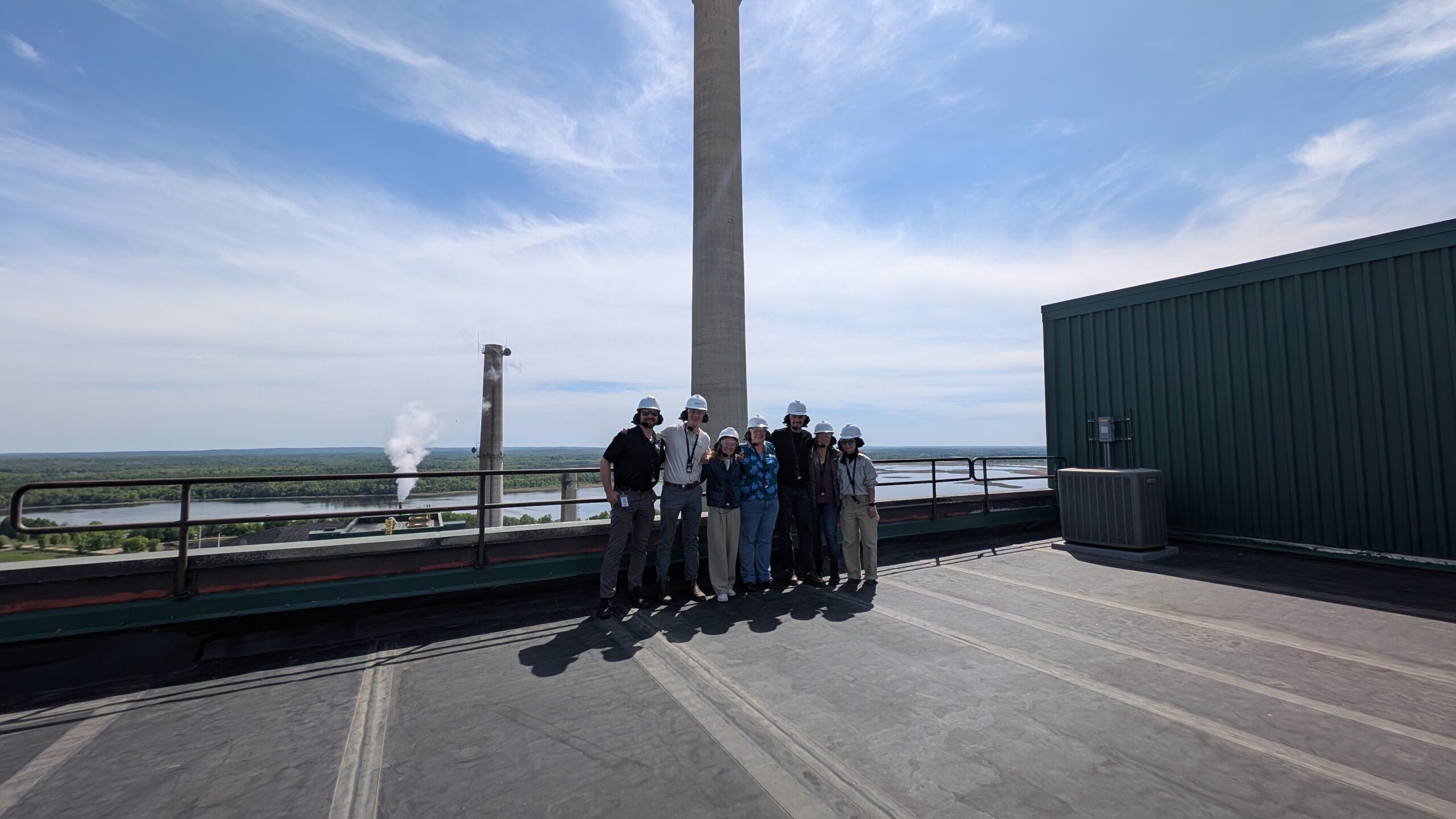
Researchers with Eco3 staff member, Simon, on the Boswell Energy Center roof.
Last month, Ecolibrium3 had the privilege of hosting a delegation of National Laboratory researchers from across the country as part of the Energy to Communities Project. Researchers from the National Laboratory of the Rockies (NLR), Argonne National Laboratory, and Lawrence Berkeley National Laboratory spent almost a full week with Eco3 staff, touring facilities, meeting local partners, and deepening their understanding of the region’s unique energy production and needs.
Energy to Communities is a program administered by the NLR that provides communities with direct technical assistance for developing and implementing complex, integrated energy systems projects. This looks like connecting researchers with local governments to help communities close the gap between energy ambitions and real-world action. Ecolibrium3 is the regional lead for this initiative, connecting the national lab network with people and industries in Northeast Minnesota.
For this research to be meaningful, context matters. A deeper understanding of the region’s assets, workforce, and environment strengthens any technical analysis or research. We helped guide the researchers’ understanding through multiple activities, including site tours.
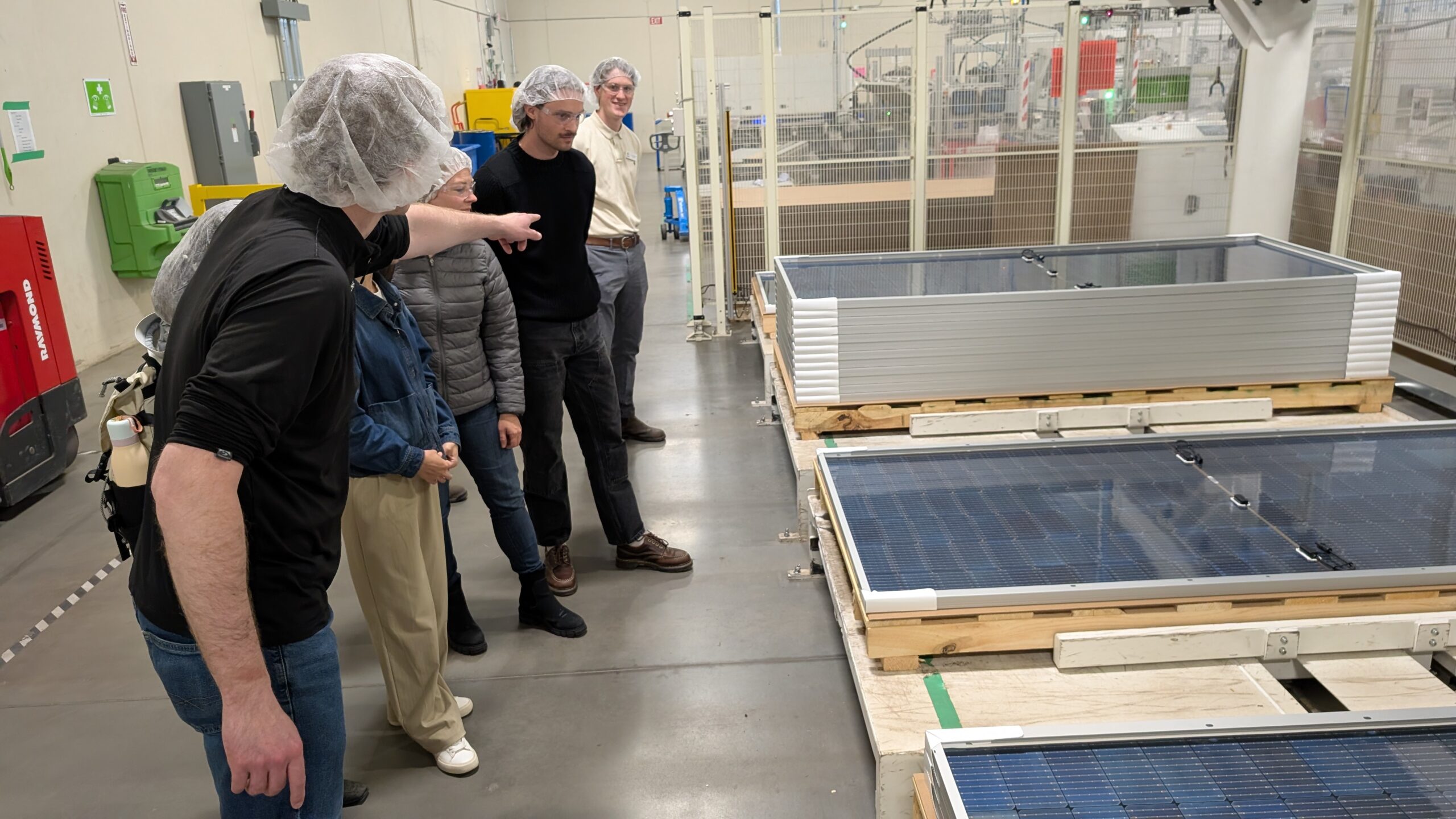
Our first stop was the Heliene solar panel manufacturing facility in Mountain Iron, on the Iron Range. Heliene is one of the few solar panel manufacturers operating in the United States, making it a remarkable regional asset for domestic clean energy production. Researchers had the opportunity to tour the production floor and learn firsthand how solar panels are manufactured in Minnesota and shipped around the nation.
Researchers learn about solar panel production at Heliene.
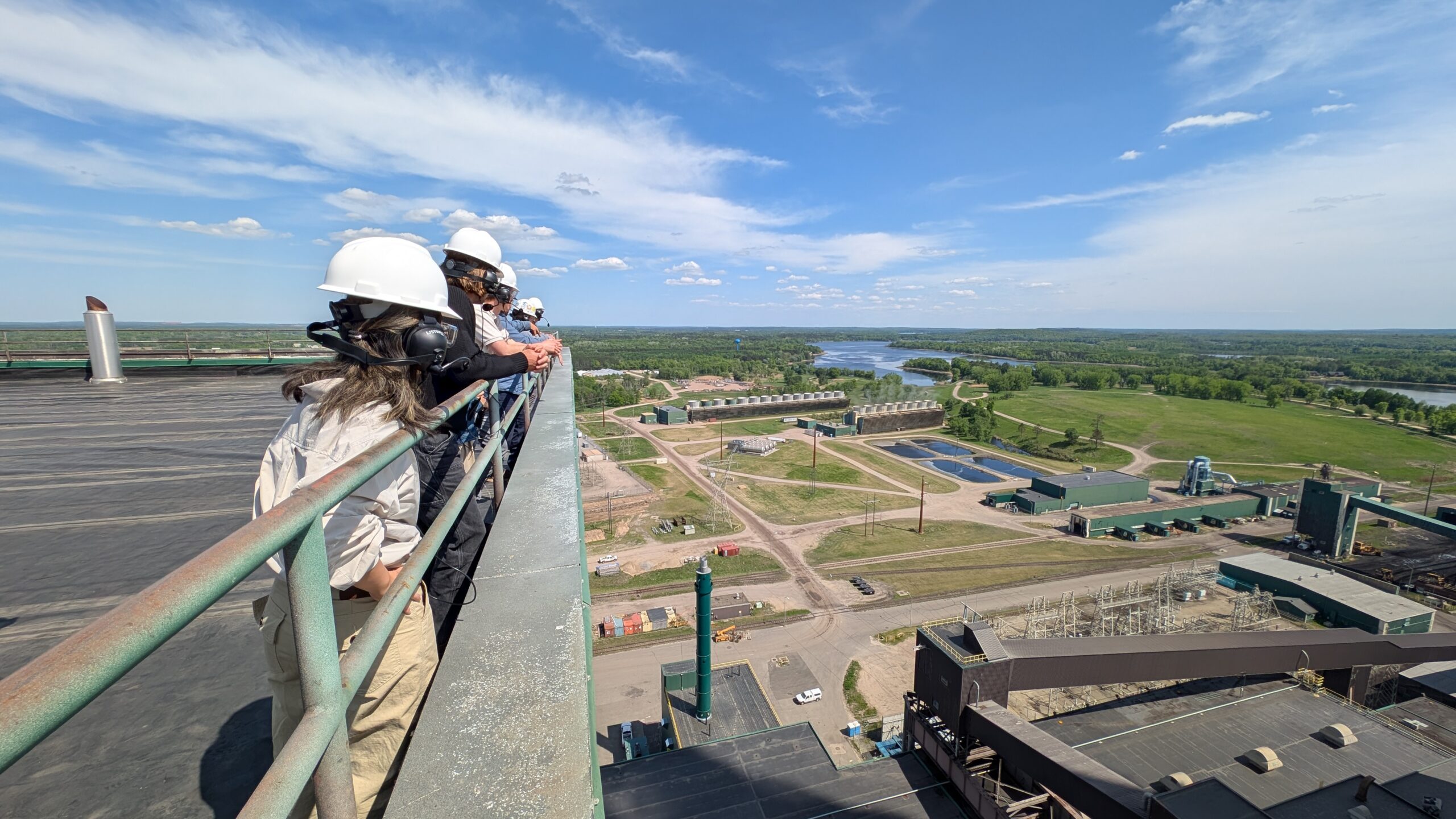
Looking out on Boswell's thermal power generation plant.
Next, we traveled to Minnesota Power’s Boswell Energy Center in Cohasset for a comprehensive tour by Minnesota Power employees. The visit gave researchers a sense of the scale and complexity involved in thermal power generation. The team examined the energy systems of this region, seeing the expertise, infrastructure, and workforce required.
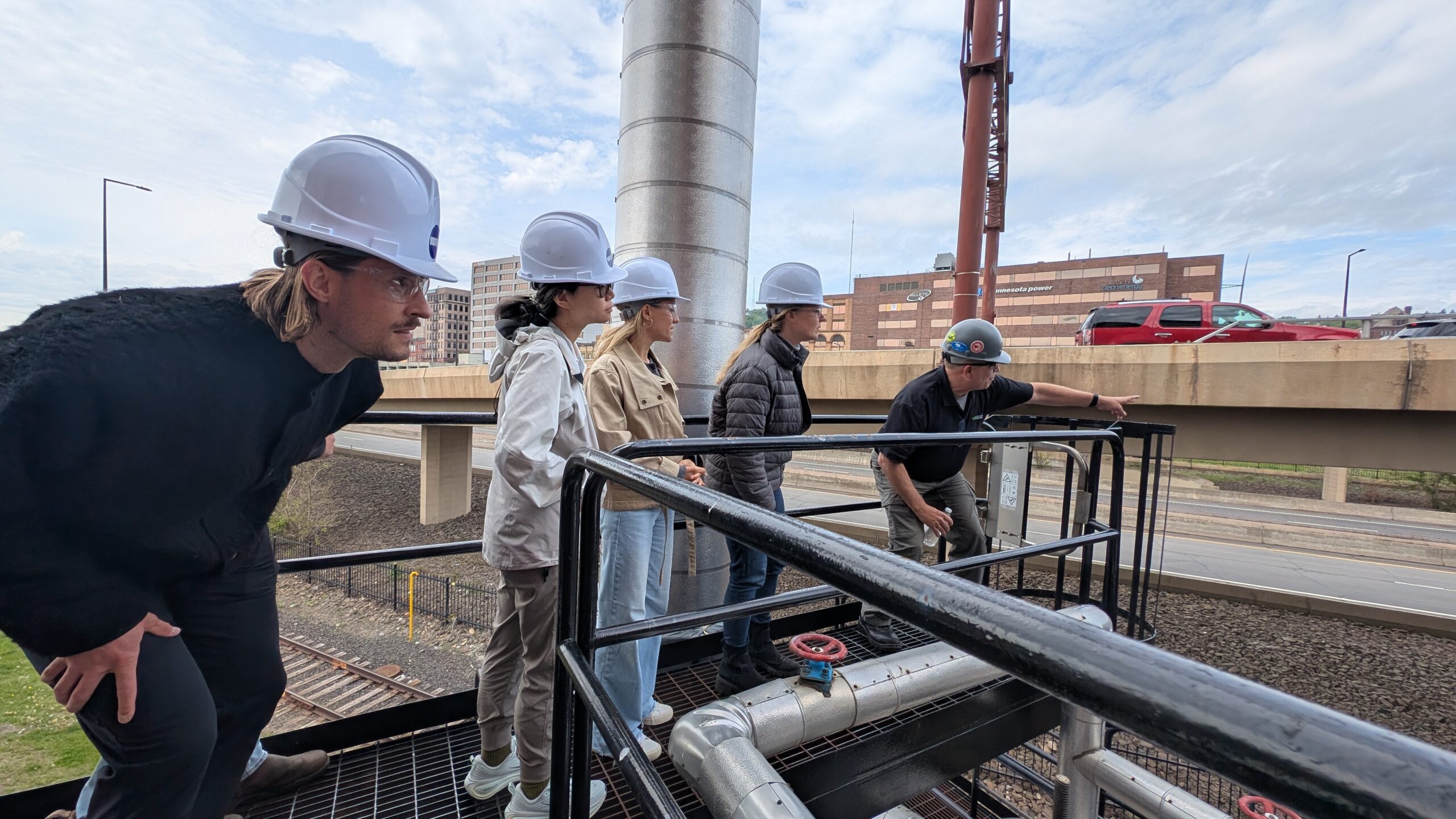
We ended the week with a tour of Duluth Energy Systems, operated by Ever-Green Energy. Duluth Energy Systems runs the city’s district energy network, delivering steam and hot water to buildings throughout downtown Duluth. District energy systems like this one represent an often-overlooked but highly efficient approach to decarbonizing building heat at scale–making it a particularly relevant stop for researchers studying integrated community energy solutions
The researchers listen to an Ever-Green Energy guide at Duluth Energy Systems.
We are grateful to the teams at Heliene, Minnesota Power, and Ever Green Energy for opening their doors and sharing their work. Visits like this one remind us why place-based partnerships are extremely important to encourage thoughtful, impactful change. We look forward to continuing this collaboration as the Energy to Communities Project moves forward.