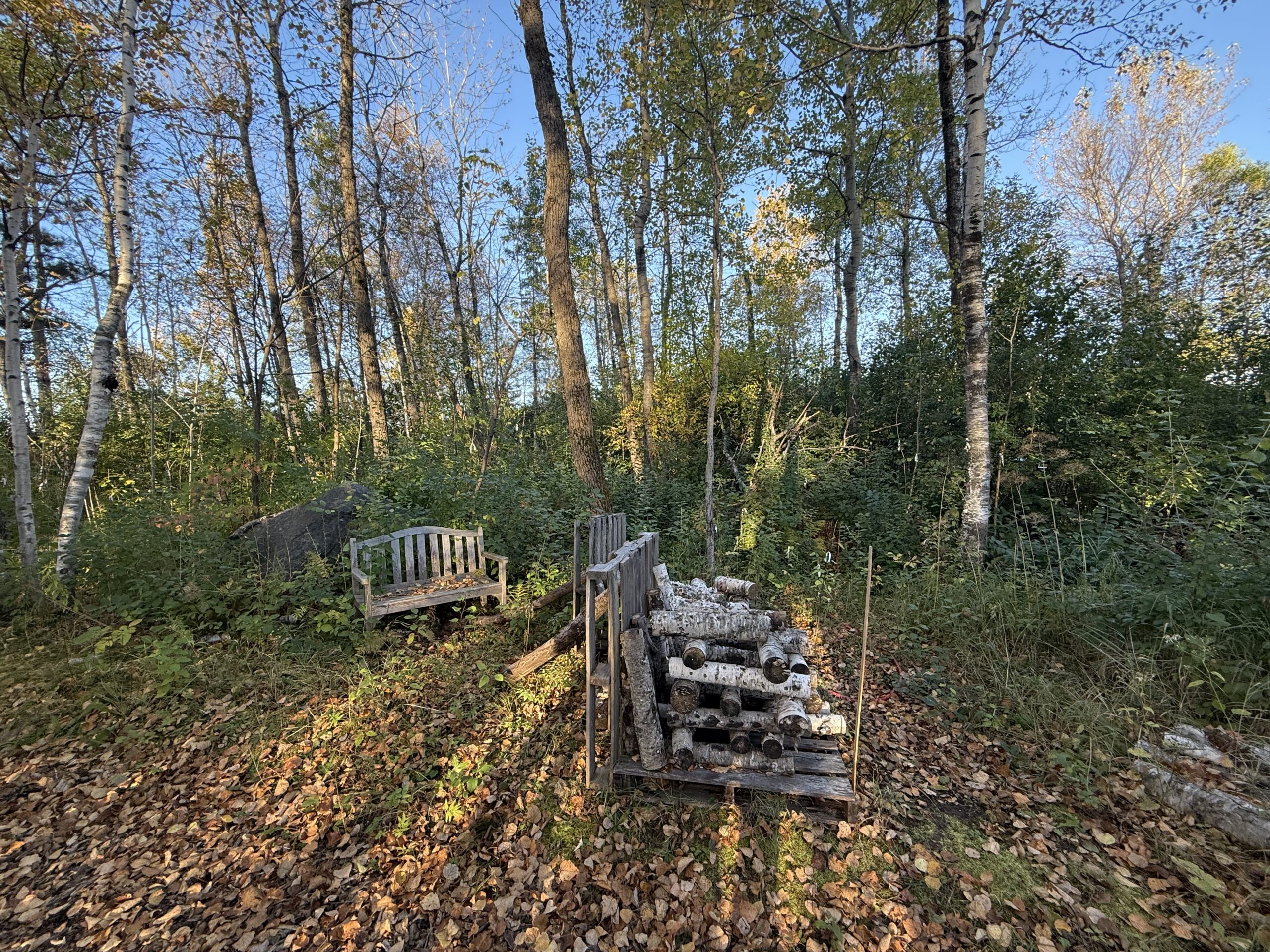
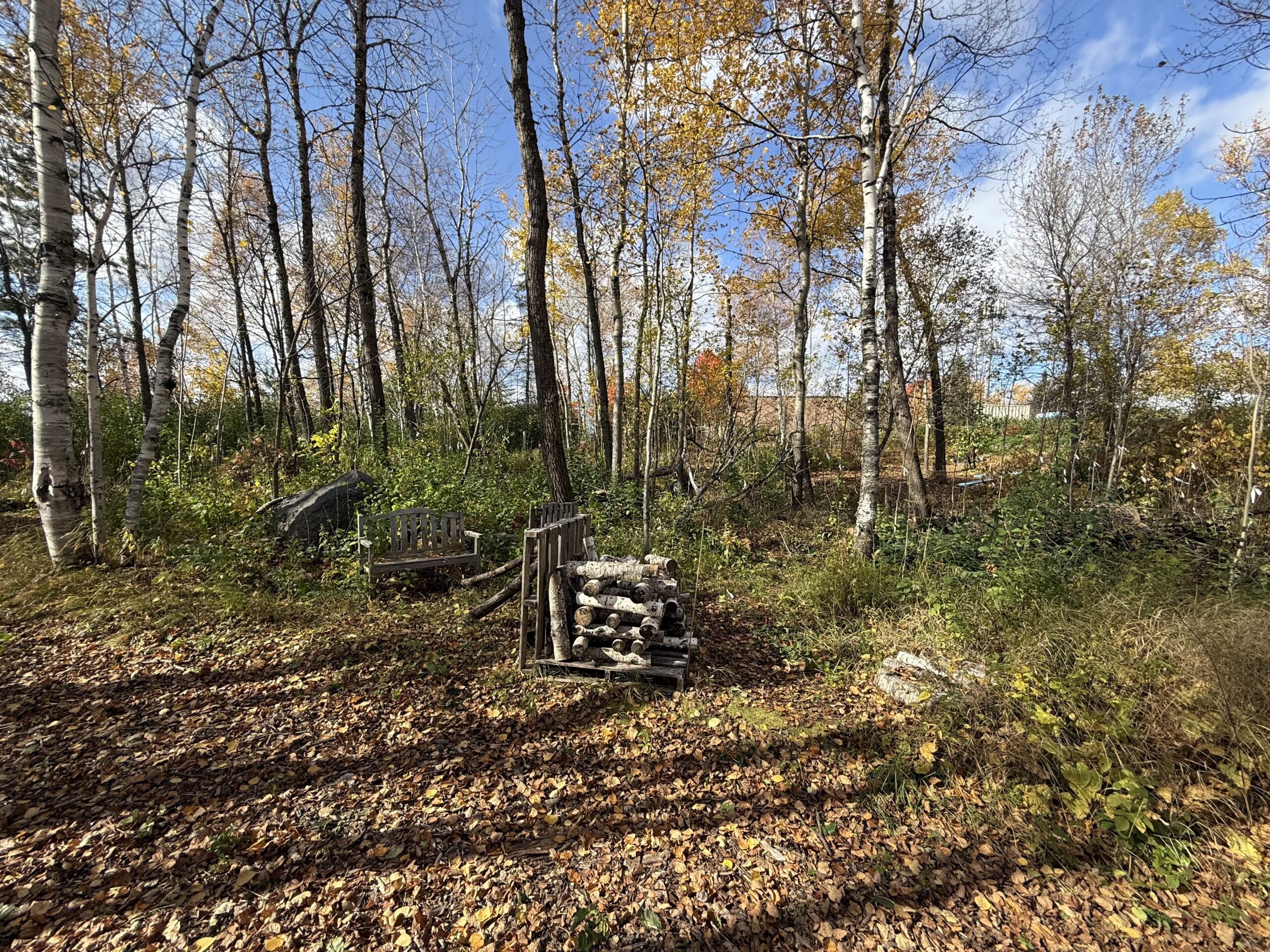
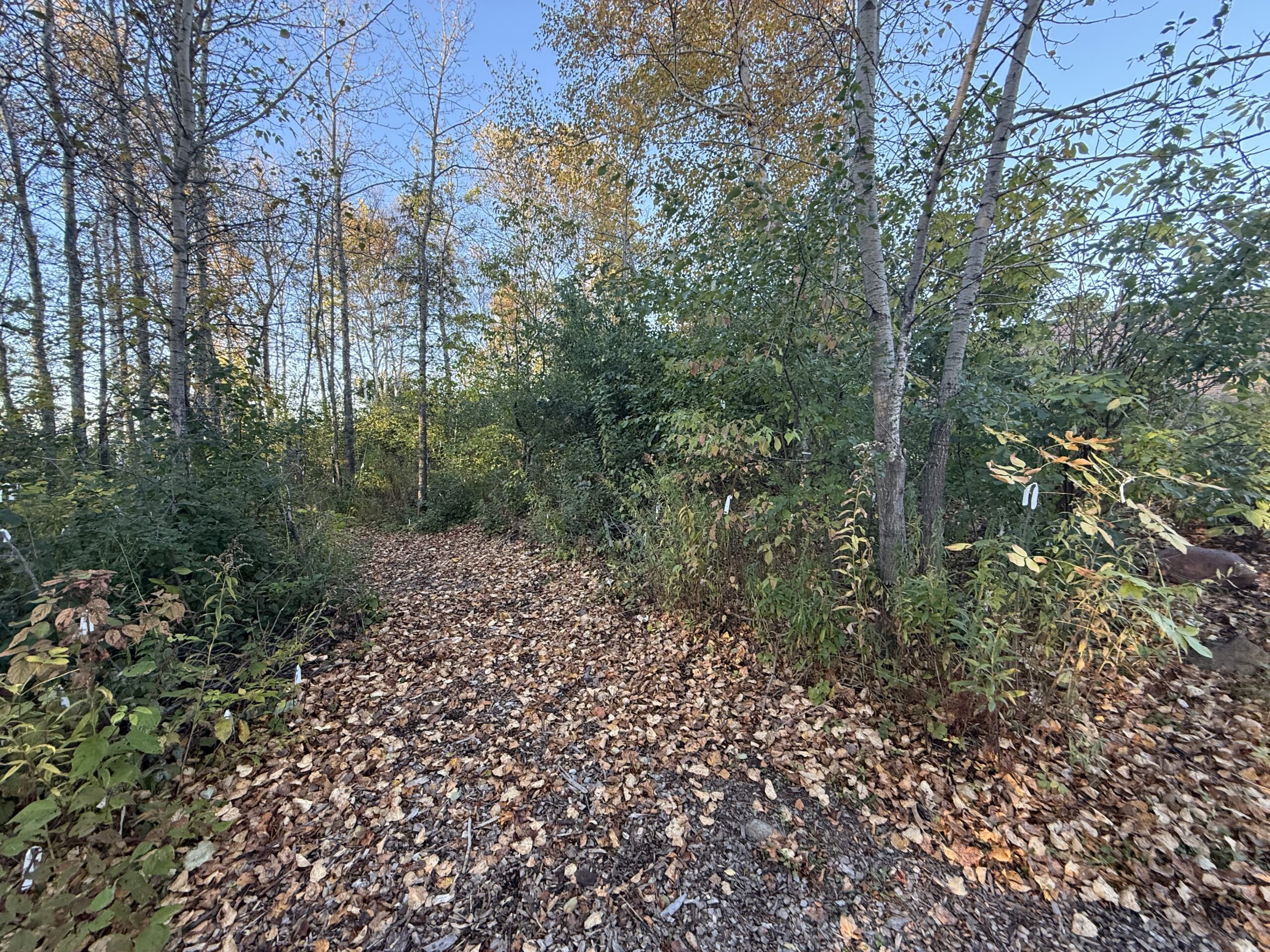
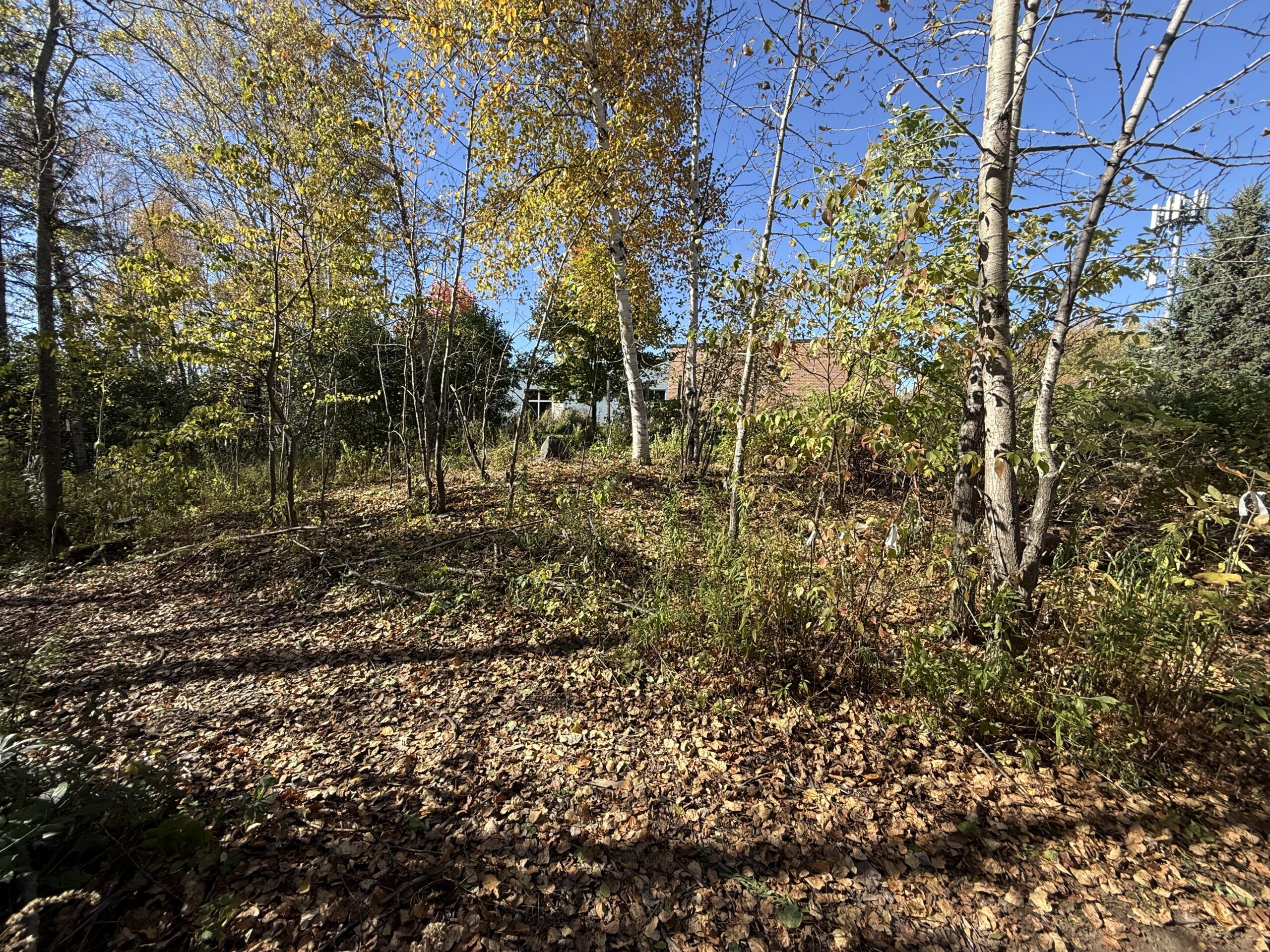
On the backside of the Fungi Forest, where our fungi-infused logs live, the dense shrubs that dominate the understory are almost all buckthorn.
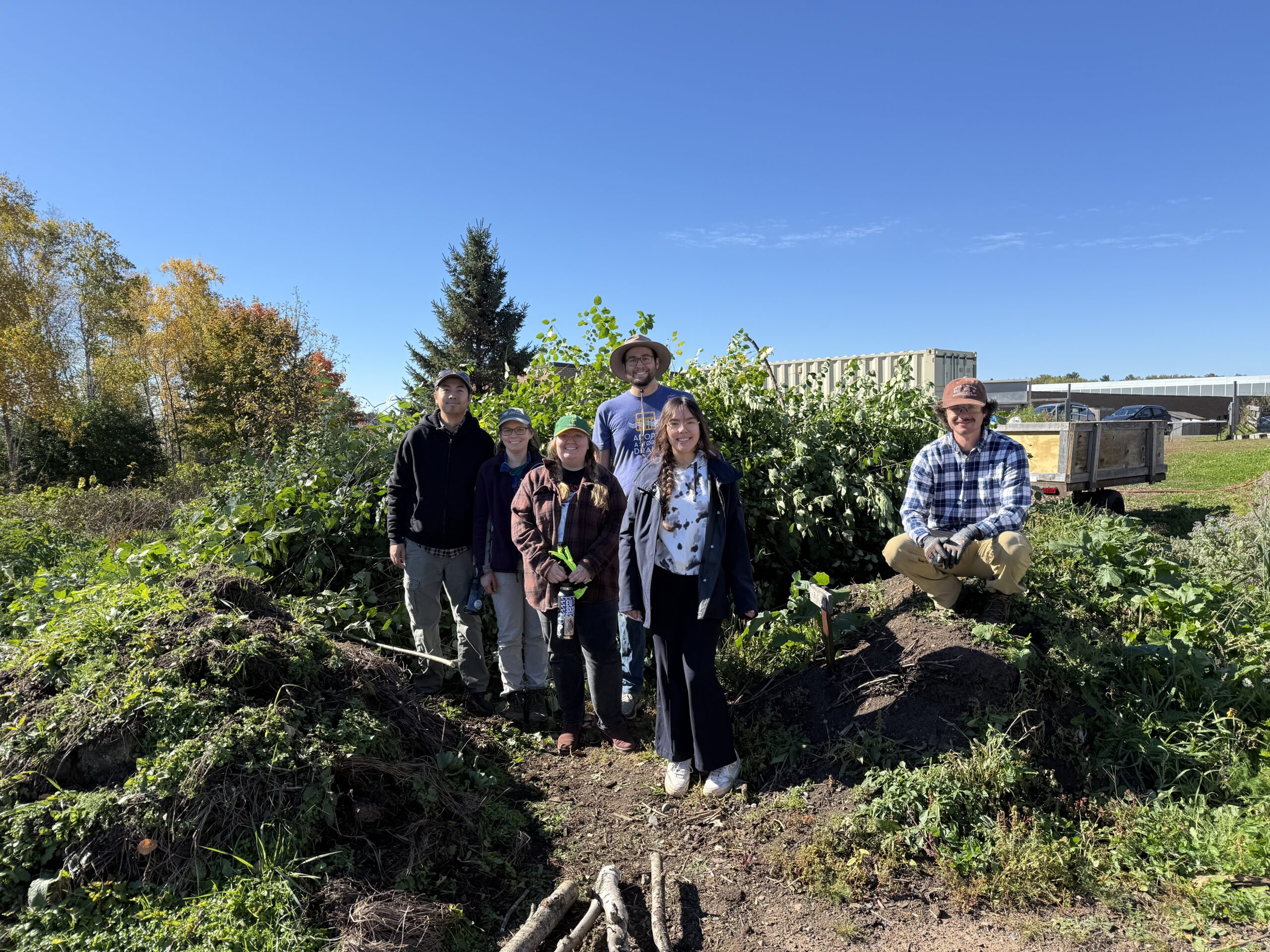
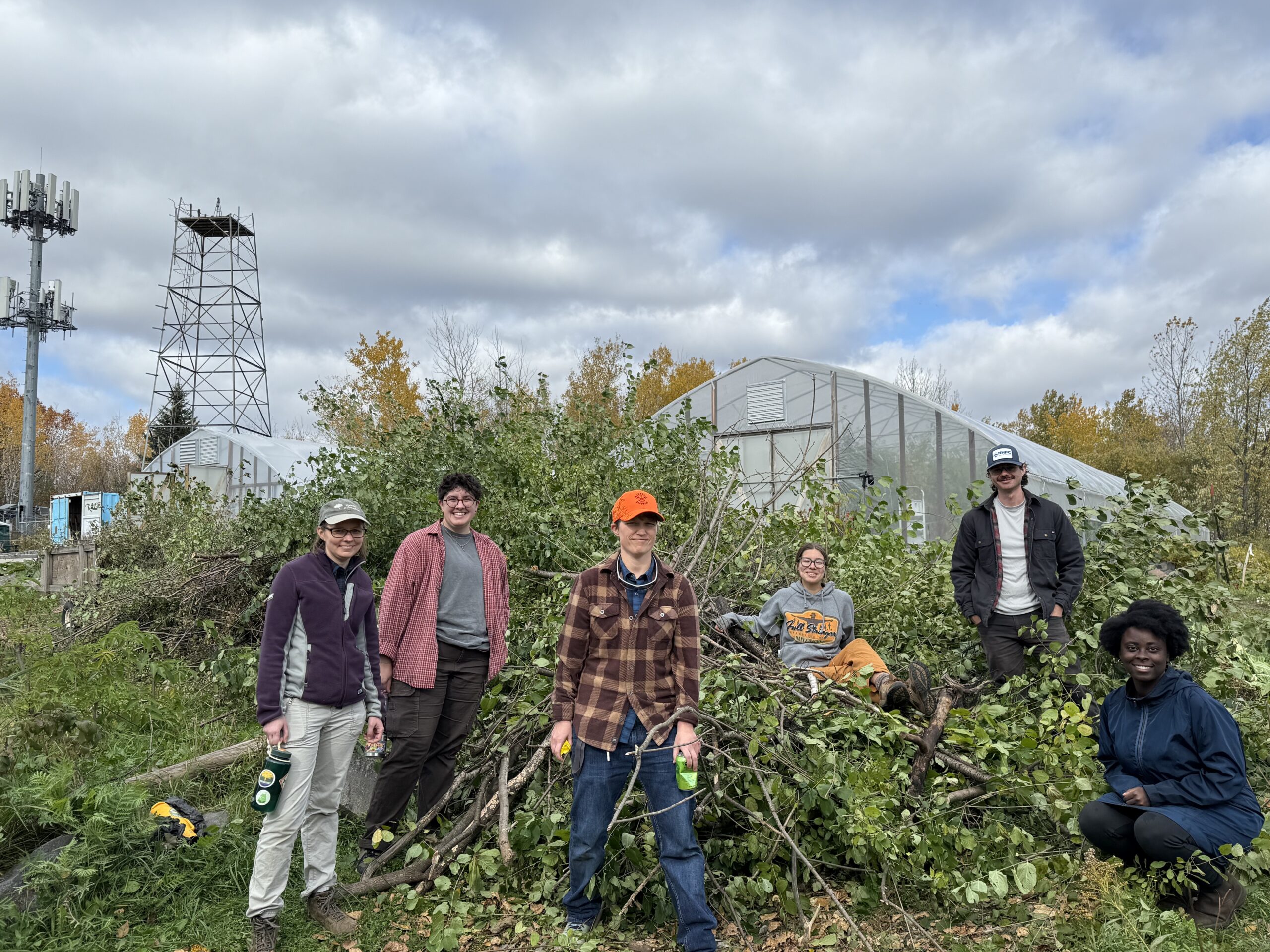
This photo was taken after both of our buckthorn removal events.
This fall, with the help of volunteers, the Ecolibrium3 Urban Farm team took steps to address the thorny problem of invasive buckthorn on the farm.
Common Buckthorn and Glossy Buckthorn are two plants not native to Northern Minnesota that have traits that allow them to take over ecosystems if left unchecked. Some of the ways that buckthorn successfully invades ecosystems are:
Its seeds are more successful at germinating than native species, allowing for buckthorn to kill off less successful young native plants.
It alters the soil chemistry, which makes it harder for native plants to grow.
It disrupts leaf litter on the ground, which is important for native plants to sprout.
It is one of the first plants to grow leaves in the spring and one of the last to lose them in the fall, which means it gets a longer growing season than native plants.
It has a very fast growth rate, which means the species is able to grow faster than surrounding plants and eventually kill the competition.
Once cut, the plant aggressively resprouts, creating upwards of 10 new stems from an untreated stump.
Because of these traits, buckthorn has been very fruitful in our Fungi Forest!
Before buckthorn removal
After buckthorn removal
Over the course of three months, the Eco3 Urban Farm team devised a plan to remove as much buckthorn as possible from the farm. We could not simply cut the plant, for it would vigorously resprout and undo all of our hard work. Instead, we took advice from the Minnesota Department of Natural Resources’ Buckthorn Management guidelines on the best ways to treat it, ultimately using a mixture of chemical and physical removal. This means that we cut all of the buckthorn stems we saw and applied herbicide to the cut stumps to ensure the plants die.
Herbicides are extremely effective forest management tools when used appropriately, while also potentially being extremely detrimental to the environment if deployed irresponsibly. To ensure that we minimized the area impacted by the applied herbicides, we determined to utilize the cut stump method with foam applicators for treating buckthorn. Our use of this method localized the spread of the herbicide to the treated stumps, limiting how much of the chemical could spread into the soil.
Using this method, our staff and volunteer groups successfully cleared 2,400 cubic feet of buckthorn over two Saturdays, and the results are noticeable! But what comes next?
Thank you to our week one volunteers who helped us remove the buckthorn!
Shoutout to our second week of volunteers! They did amazing work. Between the two weeks, we removed 2,400 cubic feet of buckthorn
Following suggestions given by the University of Minnesota Duluth’s Cover it Up project, we will be doing two things:
First, we will continue the buckthorn removal work we started this year. A recent study published in June 2023 has shown that buckthorn seeds are only viable for up to two years, with the second-year success rate being less than 4%. This research debunked the decades-old belief that buckthorn seeds are viable for six or more years. Therefore, as long as we continue removing and treating buckthorn stems for the next two years, we should see a dramatic decrease in the success rate of buckthorn in the Fungi Forest.
Second, we will be working to suppress the growth of buckthorn by encouraging native trees and shrubs to grow on the site. Some of the species we are looking to encourage on the farm are Red Osier Dogwood, Elderberry, Sugar Maple, and Pennsylvania sedge, species that are already growing on the farm.
As our season comes to an end at the farm, we have begun the process of preparing our fields and forest for next year. We hope to see you on our sign-up forms for buckthorn removal next year!