Ask City Leaders to Invest in Energy Storage and Microgrid Development
Microgrids are self-contained electric grids that can operate independently of a central power grid and have many benefits over traditional grid systems. Microgrids can better integrate renewable energy sources, like wind and solar, which are usually distributed over distances and produce energy intermittently. In addition, microgrids coupled with energy storage technologies, such as fuel cells and batteries, may be able to operate off of renewable energy completely, and thus the adoption of microgrids can help ease the city’s transition to 100% renewable energy. Finally, microgrids are more energy efficient since microgrids minimize line losses associated with electricity traveling long distances and can ultimately reduce the costs of electricity.
The City of Duluth can learn from cities like Sterling, Massachusetts, where the Sterling Municipal Light Department estimates the economic benefits from using batteries with its new microgrid technology will save the utility’s ratepayers around $400,000 a year. Another example of institutional microgrid installments is The Food and Drug Administration Federal Research Center microgrid in White Oak, Maryland, which is estimated to prevent about 72,000 metric tons of carbon dioxide equivalent emissions per year. Other cities, such as Borrego Springs, California, which is connected to the main grid by long transmission lines that are often knocked out by severe weather events, rely on a microgrid to ensure there is always power in the town.
Between the economic, environmental and resiliency benefits of microgrids, it is clear that microgrids can help improve the future of US cities. In order to meet and expand upon its energy efficiency and greenhouse gas emission reduction goals, the City of Duluth should pursue the adoption of microgrids combined with energy storage technology. Take action today by sending a letter to city leaders to urge the City of Duluth to invest in microgrids and energy storage.
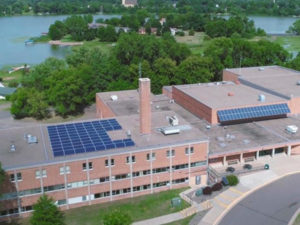
Photo by abb-conversations.com
Contact City Leaders About this Issue
Use the sample letter below to send a letter to your city councilor about this issue. You can find their contact info on the City of Duluth website.
Dear City Councilor,
As a resident of Duluth who cares about the future of our city and our planet, I am writing today to urge the City of Duluth to invest more in energy storage and microgrid development. While I was pleased to hear that the City’s new energy plan to reduce greenhouse gas emissions by 80% by 2050 includes efforts to invest in renewables, the city could better transition to renewable energy sources, if it were to also simultaneously invest in microgrid and energy storage technologies.
Microgrids are self-contained electric grids that can operate independently of a central power grid and have many benefits over traditional grid systems. Microgrids can better integrate renewable energy sources, like wind and solar, which are usually distributed over distances and produce energy intermittently. In addition, microgrids coupled with energy storage technologies, such as fuel cells and batteries, may be able to operate off of renewable energy completely, and thus the adoption of microgrids can help ease the city’s transition to 100% renewable energy. Finally, because microgrids are more energy efficient since microgrids minimize line losses associated with electricity traveling long distances and can ultimately reduce the costs of electricity.
The City of Duluth can learn from cities like Sterling, Massachusetts, where the Sterling Municipal Light Department estimates the economic benefits from using batteries with its new microgrid technology will save the utility’s ratepayers around $400,000 a year. Another example of institutional microgrid installments is The Food and Drug Administration Federal Research Center microgrid in White Oak, Maryland, which is estimated to prevent about 72,000 metric tons of carbon dioxide equivalent emissions per year. Other cities, such as Borrego Springs, California, which is connected to the main grid by long transmission lines that are often knocked out by severe weather events, rely on a microgrid to ensure there is always power in the town.
Between the economic, environmental and resiliency benefits of microgrids, it is clear that microgrids can help improve the future of US cities. In order to meet and expand upon its energy efficiency and greenhouse gas emission reduction goals, the City of Duluth should pursue the adoption of microgrids combined with energy storage technology.
Sincerely,
Your Name
Did you take this action? Report it!
Help us show our collective community impact by reporting that you took this action.